ERO has changed what our reports look like, for all schools visited from Term 2 this year. Read more here.
This case study explores the impact of the 2020 Covid-19 events on Māori learners in English-medium schools, and the response of leaders, schools and communities in the Bay of Plenty and East Coast regions.
To support leaders and teachers to review and strengthen the science learning opportunities they provide, ERO explored the strategies and approaches that a selection of schools had taken to increase students’ engagement in science. This short guides draws on this work to help primary school leaders think about how they can support stronger science teaching and learning in their school.
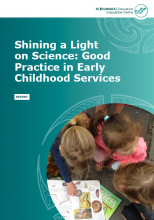
This report is the companion report to Science in the Early Years: Early Childhood and Years 1-4. This report looks at, in more depth, good practice in science teaching and learning in English-Medium early childhood education. It presents examples of good practice of science in the curriculum, from eight services identified during their ERO reviews.
To support teaching science in the early years, ERO talked to 147 early childhood services across New Zealand to find out what is happening for learners, and to identify good practice. This short guide draws on this work to help early childhood education leaders and kaiako understand what makes a difference for science in early childhood education and identify how they could strengthen science teaching and learning in their service.
Learning science in the preschool years helps children become better problem solvers and critical thinkers. This short guide aims to help parents and whānau of children in early childhood education to understand why science matters for this age group, know what to expect for science teaching and learning for their child, and think about how they can support their child’s science learning journey.
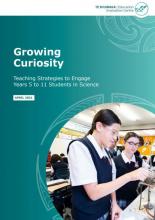
This report shares teaching approaches and strategies for Year 5 to Year 11 that ERO has identified in a range of schools where students were found to be highly engaged in science. This report should be seen as a resource for leaders and teachers looking to strengthen their teaching of science. It looks at Years 5-11 as they are the critical years for science engagement before learners make final choices on whether to continue in science.
Learning science in the primary school years helps children become better problem solvers and critical thinkers. This short guide aims to help parents and whānau of children in primary school to understand why science matters for this age group, know what to expect for science teaching and learning for their child, and think about how they can support their child’s science learning journey.
Te Pou Mataaho, ERO’s evaluation and research group, and Te Uepū ā Motu, ERO’s national evaluation and review team, pursued this evaluation to provide an evidence base about the initial impacts of Covid-19 on Māori-medium education and how the sector responded.