Meet Ruth Shinoda, ERO's Acting Chief Executive and Chief Review Officer
Ruth Shinoda is a name many in the sector will be familiar with. Over the past five years, Ruth has shaped and led ERO’s highly successful national centre for education evaluation, Te Ihuwaka, positioning it as a leader in evidence-based educational improvement.
We are pleased to announce that Ruth is ERO's Acting Chief Executive and Chief Review Officer.

Ruth is passionate about ensuring all children get the education they need to thrive. Her role enables her to do that through looking at education outcomes for children, what contributes to them and identify opportunities to improve them.
"ERO's impartial and objective monitoring and evaluation is critical to the integrity of New Zealand's education system," said Ruth.
"Ensuring every learner reaches their potential is a shared responsibility. I would like to acknowledge and thank school leaders and educators for all they do in classrooms every day, working towards a truly excellent and equitable education system, where learners thrive."
Ruth has been ERO's Deputy Chief Executive Evaluation and Policy for the past five years. Previously, Ruth has worked in education in New Zealand (including as Associate Deputy Secretary at the Ministry of Education), in England (for the Department of Education) and Japan (as a Dawia Foundation Scholar). She also has wide experience in evidence and policy both here in New Zealand and the UK and has a BA Honours Degree in Economics. Ruth is also the proud mum of two teenage girls, who keep her busy!
Tēnā koutou katoa
I am delighted to introduce you to Ruth Shinoda, ERO's Acting Chief Executive and Chief Review Officer. Ruth has strong knowledge of the education sector, with experience in both New Zealand and international contexts. You can read more about Ruth's expertise at the top of this newsletter.
As we near the end of the school year, it’s a great time to take stock and celebrate all that has been achieved across a busy year and to think about where we are headed.
I know that you will be keen to know more about what ERO has been doing and what we intend to do in 2026.
In February, we made some adjustments to our collaborative and participatory phased review approach, Te Ara Huarau. This was in response to feedback that schools wanted more certainty about timing and processes. We are back scheduling the first reporting phase, Hauhake, and to a more regular cadence for any monitoring visits subsequent to this.
In 2026, we intend to continue with this approach and the use of the School Improvement Framework (SIF), the new streamlined Board Assurance Statement (BAS), the Teaching Observation Framework (TOF) and our new Raupapa Ako Framework for Rumaki and Reo Rua settings. We have received great feedback about the usefulness of these new tools and today we hear from Tina Filipo, Tumuaki of Te Haikura ā Kiwa (the new name for James Cook High School) on how her school is using the Teaching Observation Framework as part of their own internal evaluation.
This year we made some changes to our reporting for primary and intermediate schools. Our school reports provide key information about learner success and wellbeing for parents and whānau, and provide schools with clear actions for improvement. Over the past year, we have been making some improvements to our reports, so they are clearer and easier to understand. In this edition of Sharing the Mahi, we update you on the feedback we have received on our modified school reports and what's next for reporting for schools, including those with students in Year 9 and above.
ERO's regular review and monitoring of New Zealand’s schools means we are in a unique position to identify schools that have significant challenges in key areas that impact student outcomes and to recommend that support is provided. In this newsletter, we take a look at how ERO is working with the Ministry of Education to identify schools that need more support to lift learner success.
You will have seen the changes just passed in the Education and Training Amendment Act 2025 and the proposed changes within the newly introduced Education and Training (System Reform) Amendment Bill. Schools are already asking us what this means for ERO’s role and their reviews. This newsletter highlights how ERO will respond to those changes and what you can expect from us.
ERO's good practice guides
Finally, the newsletter shares some of the great national work that ERO has undertaken this year. Our national reports are carried out in partnership with many leaders and teachers, so that we can really shine a light on what is working across schools in Aotearoa New Zealand. An example of this is our recent attendance report and ERO's practical good practice guide to support your school to boost attendance. The guide sets out five evidence-based practices that can make a real difference in your school.
You'll find links to a range of other practical good practice guides from ERO's evidence and insights group, this includes attendance, PLD for teachers, cellphones and curriculum changes. Please share these guides and resources with your team.
I have enjoyed connecting with representatives from a variety of sector stakeholder organisations over the past few months, sharing our new tools and resources, and providing updates on our evaluation mahi. I am always keen to connect with school leadership groups, so please reach out to [email protected] if your group is interested in receiving updates from me.
If you missed the last newsletter, you’ll find previous editions of Sharing the Mahi here on our website.
If you have any questions or feedback about our mahi in schools, please contact your Evaluation Partner or Toki ao Mārama, or email us at [email protected]
Meri Kirihimete from our team to yours
We take this opportunity to thank everyone who has worked alongside us this year – from engaging professionally in rich review experiences that drive improved outcomes for your students, sharing your insights as part of our national reviews, accompanying us in the field as a leadership partner, or engaging with us in online meetings and workshops.
From all of us at ERO, we wish you and your team a very Merry Christmas and a restful summer break. We look forward to working with you again in 2026.
Ko te tamaiti, te putake, o te Kaupapa
The child, the heart of the matter
In this newsletter:
An update on our school reports
Education and Training (System Reform) Amendment Bill
Supporting schools that need it most
Education and Training Amendment Act 2025
Practical good practice guides for schools:
- Attendance
- PLD for teachers
- Cellphones
- Curriculum changes
How Te Haikura ā Kiwa is using the Teaching Observation Framework
An update on our school reports

Our school reports are read by a range of audiences, including school leaders, parents and whānau, and the community. We want our reports to be clear, easy to understand, and useful for everyone.
Earlier this year, we introduced our modified school reports and have been testing them with primary and intermediate schools. The reports include a parent summary at the top, followed by the next steps for improvement for the school.
We had some great feedback about the new report format from school leaders. We also sought feedback from parents and whānau, who told us that there were still some adjustments we could make to the language we use in our reports and the way the information is presented.
As part of this improvement process, we made some further enhancements to the format and language of our reports, so they are clearer and easier to understand.
All school reports are now following this enhanced format, and we invite further feedback from you when you receive your next report.
What's next?
This term, we are testing our proposed new report format with schools that have students in Years 9 and above. These reports include:
- A one-page summary providing parents and whānau an “at a glance” overview of a school’s performance.
- A full report, which includes our evaluation judgements, more detail about the school's context and recommended next steps for improvement.
- A school data summary, including attendance and achievement information.
Thank you to the schools who have agreed to provide feedback on these reports. All feedback from the trial will be considered as we finalise the format. We look forward to sharing more about our new school reports early next year.
Education and Training (System Reform) Amendment Bill
Last month, Education Minister Erica Stanford introduced the Education and Training (System Reform) Amendment Bill, which includes a proposal to transfer some of the Ministry of Education’s regulatory functions related to licensing, registration and compliance of school hostels and private schools to ERO. Additionally, the Bill clarifies the process ERO and the Ministry will undertake when we identify that a school is of serious concern and requires additional support or intervention.
It’s important to note that there is a process underway now as these proposals are being considered, and there will need to be changes in legislation before any changes take effect. We’ll keep you informed as more information becomes available.
ERO’s reviews of schools, school hostels and private schools will continue as usual.
Supporting schools that need it most
We are working with the Ministry of Education to achieve equitable and excellent outcomes for all learners.
No two schools are the same, and some schools need more support to bring about the necessary improvements to lift learner success. As part of our evaluation mahi, where we identify a school that needs additional support, we will work with the Ministry to ensure that the right support is provided in a timely way.
These are schools that have low regular student attendance, a large proportion of students who are regularly and chronically absent, low student achievement, and a significant number of students leaving school without NCEA qualifications.
The Ministry of Education has a range of support and interventions available under section 171 of the Education and Training Act 2020. These include a requirement by the Ministry for a board to engage specialist help, and to prepare and carry out an action plan. Alongside the Ministry, we work with schools as they build an improvement plan, and we monitor their progress regularly.
This approach ensures that a consistent and appropriate plan is in place for schools that need additional support to lift learner outcomes.
Education and Training Amendment Act 2025
In November, the Government passed the Education and Training Amendment Act 2025, which brings about some changes that relate to our mahi in schools and kura. Like all legislation changes, we are responding to this change and are adjusting our evaluation documents to reflect the Act.
The two main changes that relate to our school evaluations are:
Focusing school boards on raising educational achievement by making this a board’s highest priority objective and introducing new supporting objectives on student attendance and assessment.
Removing an explicit obligation on school boards to give effect to Te Tiriti o Waitangi. To meet the new paramount objective of educational achievement a school board will be required to ensure it:
- seeks to achieve equitable outcomes for Māori students
- takes all reasonable steps to provide for students to be taught, and to learn, in te reo Māori on request of their parents and immediate caregivers, and,
- takes reasonable steps to ensure that the policies and practices for the school reflect New Zealand’s cultural diversity.
Other changes include:
Removing the Minister’s power to issue a statement of national education and learning priorities (NELP).
Attendance plans are now required. School boards must have these by the first day after 25 January 2026 when the school is open for instruction; distance schools by 20 July 2026.
You can read more about the Act on the Ministry of Education’s website.
Our focus
The role of ERO has not changed. We will continue to evaluate and report on how schools, boards and leaders are achieving equitable outcomes for Māori learners.
ERO remains laser focused on equity and excellence for all learners. During a school review, we will discuss how you are supporting Māori learners’ progress and achievement at your school.
Māori learner success is supported:
- where school boards, leaders and teachers know about and specifically support the aspirations of Māori learners and their whānau to achieve
- where schools set high expectations for attendance, progress and achievement
- where schools actively engage in respectful working relationships with Māori learners and their whānau - invitational, respectful, reciprocal relationships are evident
- the school affirms Māori learners and provides engaging, challenging and relevant content and curriculum that is progressive and paves the way to success and future learning and careers
- teachers use evidence-based strategies that respond to each learner's diverse needs and reduce barriers to learning, so that every child, no matter their background or circumstances, can thrive.
- the school is a place where students feel safe and included – a sense of belonging
- school boards, leaders and teachers use a range of high-quality assessment information to look at what is working well for groups of learners – including Māori - and what they could do to improve their provision and success.
We know that many boards, schools and teachers work hard to make sure that these good practices are what children experience every day. We acknowledge your hard work in closing the equity gap between Māori and non-Māori achievement.
Teachers and leaders continue to get up every day to provide relevant, engaging learning for all children, that leads to success, in partnership with parents, whānau and community.
If you have any questions about your upcoming ERO review, please reach out to us.
ERO's research and insights: practical good practice guides and resources for schools
Did you know ERO has a dedicated evidence website? Go to evidence.ero.govt.nz for all of our research reports, practical guides, and other useful resources.
ATTENDANCE
How are attitudes to attendance changing?
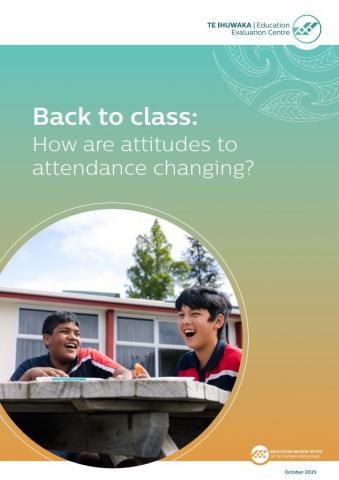
ERO has delivered a new report in its series on attendance. This report looks at whether regular attendance and attitudes to attendance have changed and what school actions and supports make a difference.
We found that students' attitudes to attendance is improving, thanks to the hard work of schools. This report sets out what schools do that has the biggest impact on attitudes to attendance.
Good practice guide for leaders and teachers
This good practice guide and summary poster set out the five most effective actions schools can take to shift student attendance - and the extra boost that comes from making attendance a schoolwide priority. These resources are intended for schools and teachers.
PLD FOR TEACHERS
How effective is professional learning and development?
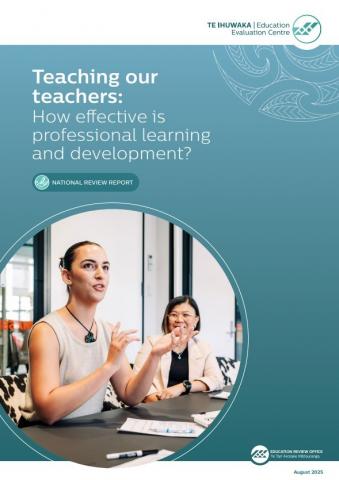
Teacher development helps teachers build their expertise, learn proven teaching methods, and improve their classroom practice. This leads to better learning and achievement for students.
This report sets out how good PLD is, and what PLD has the most impact on teaching and student outcomes. It highlights key findings and recommendations to improve teacher development in New Zealand.
Good practice guide for school leaders
School leaders play a key role in selecting and supporting teachers' PLD so that it leads to better student outcomes. This guide and summary poster set out how to choose the most effective PLD.
CELLPHONES
Removing cell phones from New Zealand's classrooms
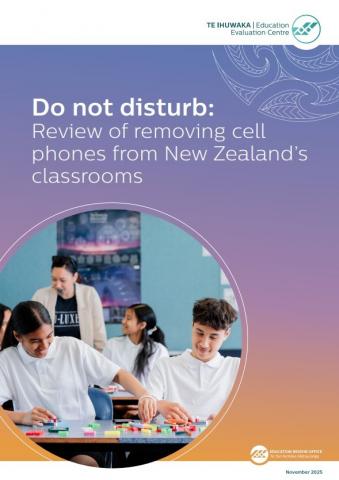
To support greater student engagement and achievement, from the beginning of Term 2, 2024, school boards and kura were required to ensure that students do not use cell phones during the school day. ERO looked at the impacts a year later, and the findings are encouraging – removing cell phones has led to increased focus, improved academic outcomes, and a reduction in bullying. This report outlines the reasons behind these results and highlights further opportunities for strengthening the policy’s impact.
Resources for school leaders and parents
This good practice guide sets out the most effective strategies being used by schools in Aotearoa New Zealand to stop students using their cellphones in school. It provides practical actions school leaders can take, and links to other useful resources and tools.
In our review, we found that the most common cause for rule-breaking is students contacting parents or whānau. To support schools, ERO has developed a brief parent information sheet schools can give to parents to help them understand their role.
CURRICULUM CHANGES
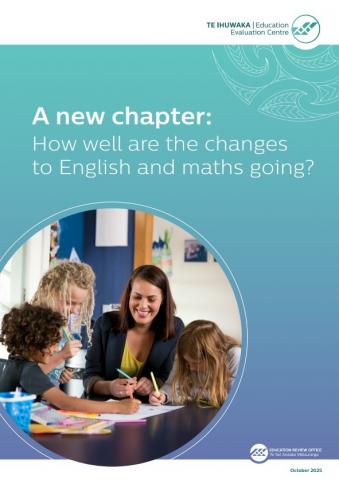
ERO has reviewed how well the changes to English and maths in primary school are going, and the impact this is having on teaching and learning. Read the report here.
Good practice guide for school leaders
This good practice guide shares the early insights of what works well when implementing curriculum change – gathered from ERO’s review of implementation of the refreshed English and maths learning areas throughout New Zealand. It also draws on established evidence, providing practical actions leaders can take.
How Te Haikura ā Kiwa is using the Teaching Observation Framework
The Teaching Observation Framework (TOF) tool is designed to help you understand more about your school’s teaching practices and identify where improvements may be necessary. Our reviewers use the TOF with you during a school evaluation.
One of the schools that has been successfully using the TOF as part of their own internal evaluation is Te Haikura ā Kiwa (the new name for James Cook High School), where all teachers recently took the time to reflect on their own teaching practice and identify areas for improvement.
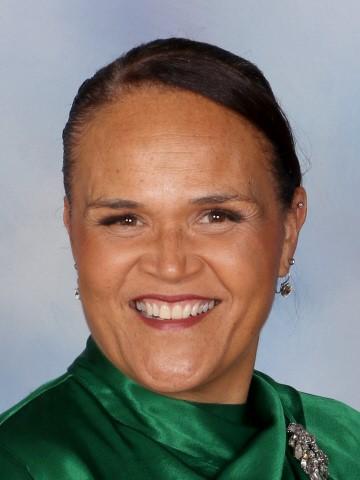
Te Haikura ā Kiwa Tumuaki, Tina Filipo (pictured above), shares how this activity went, and how the TOF is supporting improved practice at her school.
“Like all schools, we have areas of strong practice and others that need improvement. Using the TOF as a self-reflection tool helps teachers identify these areas for growth and take ownership of their development. It also gives me a clear understanding of what needs to be strengthened, so I can plan and target my professional learning strategically,” said Tina.
Prior to ERO’s latest visit to the school, Tina asked her staff to undertake a self-evaluation, using the domains in the TOF, focusing on their own teaching practice.
“Our teachers used the TOF to reflect on their practice and then after the observation, triangulated and used the observation feedback to reflect on practice and look at the next steps,” she explained.
Tina recognises the potential of the TOF, supporting leaders to know more about where improvements are needed.
“I see real value in using the TOF to reflect on practice and make this a normal part of our school culture. This also allows us to align our work with the School Improvement Framework and the analysis carried out by ERO. It’s a highly useful tool for strategic planning and setting clear priorities,” said Tina.
Where to find the TOF
The TOF is available for all schools to download here on the ERO website. You’ll find the Teaching Observation Framework, a guide to using the framework and a school synthesis template, which provides a way for you to record your teaching observations, providing examples of excellent practice, and helps you to identify areas of focus for future professional learning and development.
We would like to thank Tina for sharing her insights with us for today's newsletter.